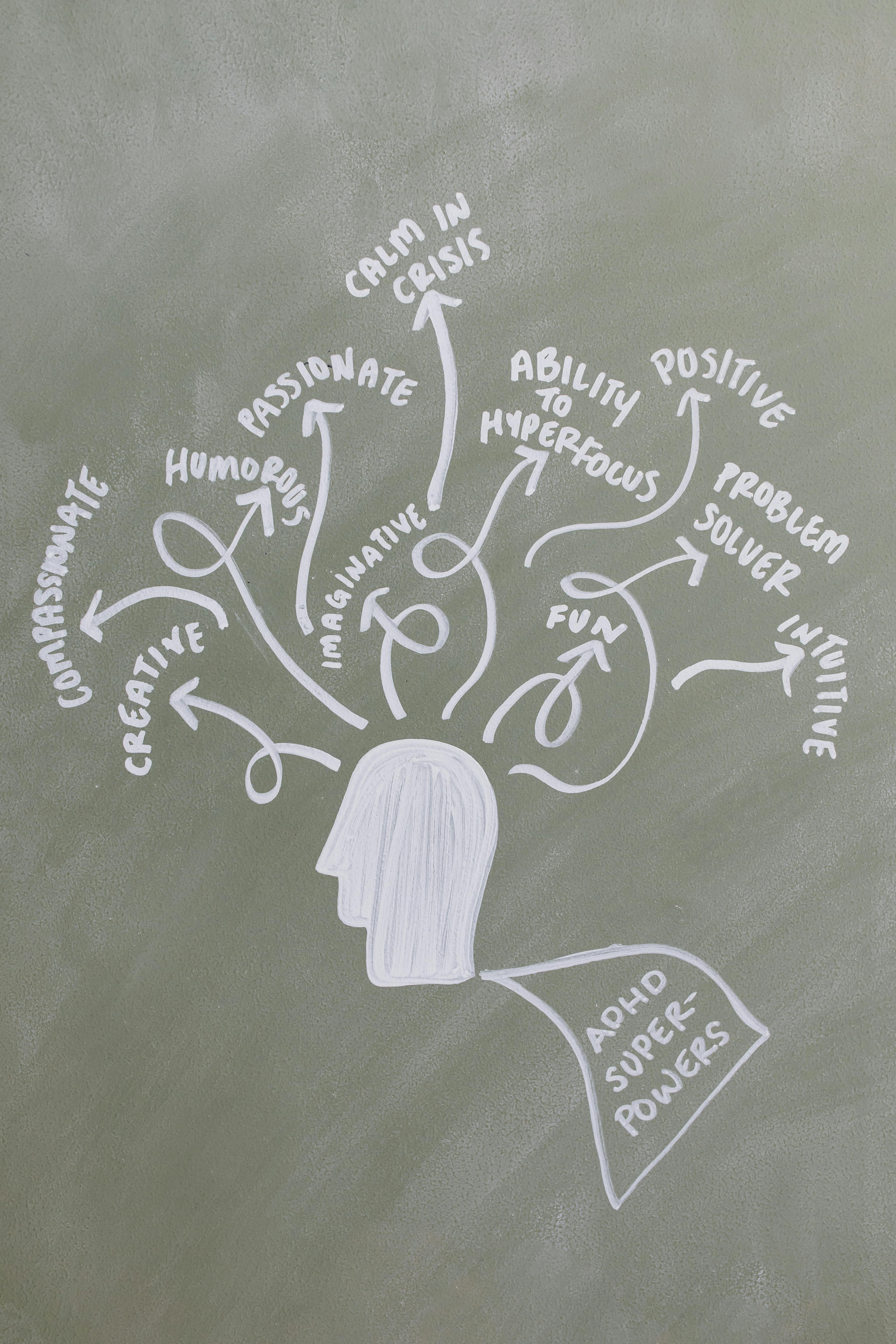

If you had asked anyone in the 90s whether I was an ADHD kid, they would have laughed.
I was quiet. I followed the rules. I wasn’t bouncing off walls or getting pulled from the carpet for talking. I was the type of girl teachers described as “smart, but inconsistent,” and I desperately wanted to be better — even when I didn’t know how.
Most of my teachers assumed I just needed to try harder.
I assumed that too.
What they couldn’t see — what I didn’t even have language for then — was how hard I was trying. I remember sitting at the kitchen table with homework in front of me, stomach twisted into knots, feeling physically ill at the thought of starting. I knew the material. I knew I wasn’t lazy. But every night turned into the same silent war between my brain and my intentions. And most nights, the homework won.
I carried that into adulthood before I ever connected the dots.
Before I learned that girls with ADHD often look calm on the outside… while drowning on the inside.
And today, I see that pattern over and over in girls who sit in classrooms just like I did — bright, imaginative, deeply capable, yet quietly overwhelmed. They aren’t “problem students,” so their struggles stay invisible until they show up as anxiety, perfectionism, tears over homework, or the crushing belief that they’re not enough.
This article is for those girls — and for every parent who wants to help them feel seen.
Why ADHD in Girls Slips Through the Cracks
For decades, ADHD research was built around boys. Boys who fidget, climb things, lose papers, talk nonstop. But girls? Many of us grew up learning to mask — to perform good behavior even when our brains were scattered.
Studies show that girls are far more likely to experience inattentive-type ADHD, which can look like:
- Daydreaming instead of disrupting
- Quietly disorganized instead of chaotic
- Emotionally overloaded at home but calm at school
- “Smart, but unmotivated” instead of struggling
We internalize instead of explode.
We self-blame instead of misbehave.
And while boys are diagnosed young, girls are often diagnosed years — even decades — later.
Signs Parents Can Watch For (Beyond the Stereotypes)
When I was growing up, nobody questioned why homework took me four hours. Nobody noticed the headaches, the procrastination, the stomach aches before tests. I held it together just enough to be “fine.”
Here are subtle signs parents might see today that teachers miss:
- Homework takes disproportionately long
- She gets good ideas but struggles to start tasks
- Essays and projects spark anxiety instead of excitement
- She’s capable but inconsistent — high one week, low the next
- Emotional crashes after school from the effort of holding it together
- She feels like she’s trying her hardest, yet never fully succeeding
If you read that list and thought, that sounds like my daughter, keep reading.
How Parents Can Support ADHD Girls at Home
1. Normalize Her Brain — Don’t Pathologize It
Girls absorb labels.
Even implied ones.
Instead of “Why aren’t you trying?” try:
“Your brain works differently — let’s find strategies that fit you, not force you into something that hurts.”
Let her know that struggle isn’t moral failure. It’s executive function.
2. Break Tasks Into Wins (Instead of Mountains)
ADHD brains freeze when tasks feel too big. Instead of write the essay, try:
- Write the title
- Make three bullet ideas
- Turn one bullet into a paragraph
- Add one detail
Every check mark builds momentum.
Every micro-step proves she’s capable.
3. Use Tools That Externalize Memory + Organization
Notebooks. Stickies. Visual schedules.
Timers for momentum, not pressure.
This isn’t accommodation — it’s scaffolding.
4. Protect Emotional Load as Much as Academic Output
Homework battles aren’t about attitude — they’re about capacity. Let her move, take breaks, breathe, reset. Her brain burns more fuel to meet expectations. She isn’t weak — she is working twice as hard as people realize.
Working With the School (As Her Advocate, Not Her Defender)
A teacher might only see the quiet girl who pays attention.
You see the girl who collapses at home because she’s exhausted from holding it together.
Here’s the language I wish adults had used for me:
“She is bright and capable, but she needs support initiating tasks, breaking down assignments, and managing emotional overwhelm.”
Ask about:
✔ 504 plans or IEP support
✔ Extended time on assignments
✔ Reduced multi-step instructions
✔ Movement / sensory breaks
✔ Alternative formats for big projects
You’re not asking for special treatment —
you’re asking for equitable access.
Most Importantly: Build Her Identity Beyond Struggle
Girls with ADHD often internalize failure long before they ever hear the diagnosis. We feel capable in theory but inadequate in practice. I carried that belief for years.
So focus not only on performance — but on self-concept.
Praise effort.
Celebrate creativity.
Highlight strengths that school doesn’t measure.
Let her see herself as more than the missing assignment in her backpack.
What I Know Now
If someone had recognized my ADHD in the 90s — if someone had said, Your brain isn’t broken. It’s just wired differently. — I think my childhood would have felt a little softer.
Your daughter could have that softness now.
She could grow up knowing she isn’t flawed — just untangled differently.
And with support, structure, compassion, and understanding, girls like us don’t merely survive school.
We thrive.
 ADHD and Awkward
Leave a comment